


TMC successfully performs world-first cardiac procedure
By Tucson Medical Center
·
07/26/2023
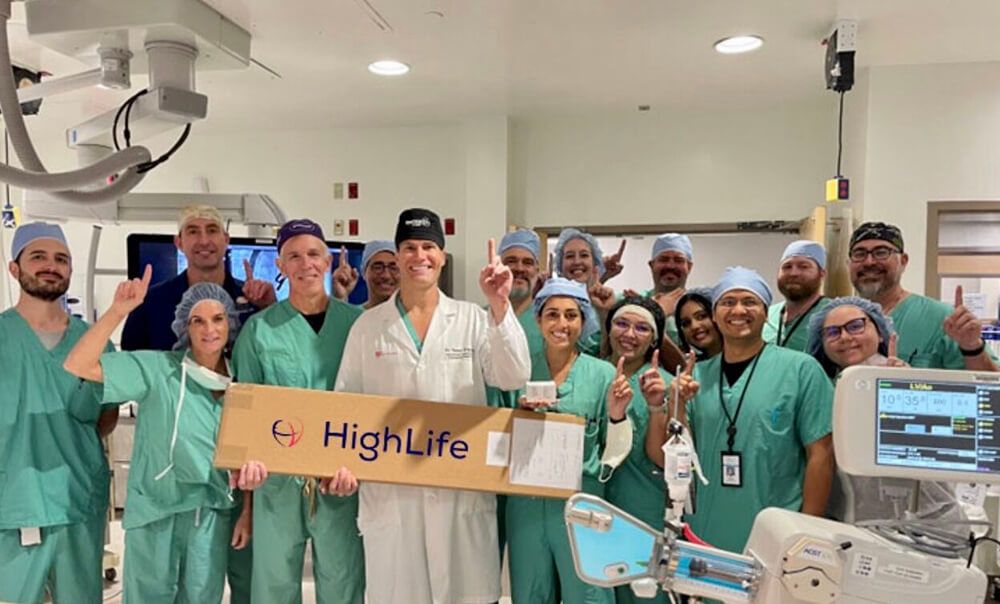
TMC successfully performs world-first cardiac procedure
A patient with a serious heart problem recently underwent a world-first cardiac treatment at Tucson Medical Center involving both a low-stress procedure and an easy recovery.
The patient, who was experiencing high backflows of blood in his heart, had his mitral valve replaced through a catheter-based surgery and spent just one night in the hospital afterwards. Typical open-heart surgery, in comparison, requires hospitalization for five to seven days, and then no driving or strenuous activity for 30 to 60 days.
The quick procedure and fast recovery is exactly what TMC’s Dr. Ariana Ehsan and Dr. Thomas Waggoner were aiming for when they started researching this technique about four years ago. Waggoner is director of both structural heart and cardiovascular research at Tucson Medical Center, and a partner of US Heart & Vascular.
Using a High Life Mitral Valve, Waggoner, a structural interventional cardiologist, performed the surgery July 7. The patient resumed normal living within less than a week.
Previously, with backflow problems, cardiologists could only prescribe medication to slow it down, or recommend surgery. This procedure allowed a full valve replacement without full surgery, said Ehsan, who is a clinical researcher with TMC.
Victories like this are what Ehsan loves about her job.
“By working solely in clinical research, I am able to provide and assist in getting diverse treatment options for our patients,” she said. “It really feels good to help people feel good.”
The procedure is so new, she said, that only 30 to 45 patients will be having it done right now as they continue to determine its effectiveness and versatility.
Mitral valves are the most challenging to treat both surgically as well as through catheter-based procedures, Waggoner said. That’s because of the valve's location in the heart, it’s multiple leaflet components and its proximity to the aortic valve make it more complex he said.
Up until last year, Waggoner said, patients with these challenges were being referred for care in Phoenix. Now, he said, referrals to TMC are coming in from all over the United States and Canada.
“It’s a true testament to the success of the TMC Research Team,” he said, “to bring global procedural firsts and leading edge technology to our community and our patients.”


