


IS steps up to improve TMC recycling
By Tucson Medical Center
·
08/07/2024
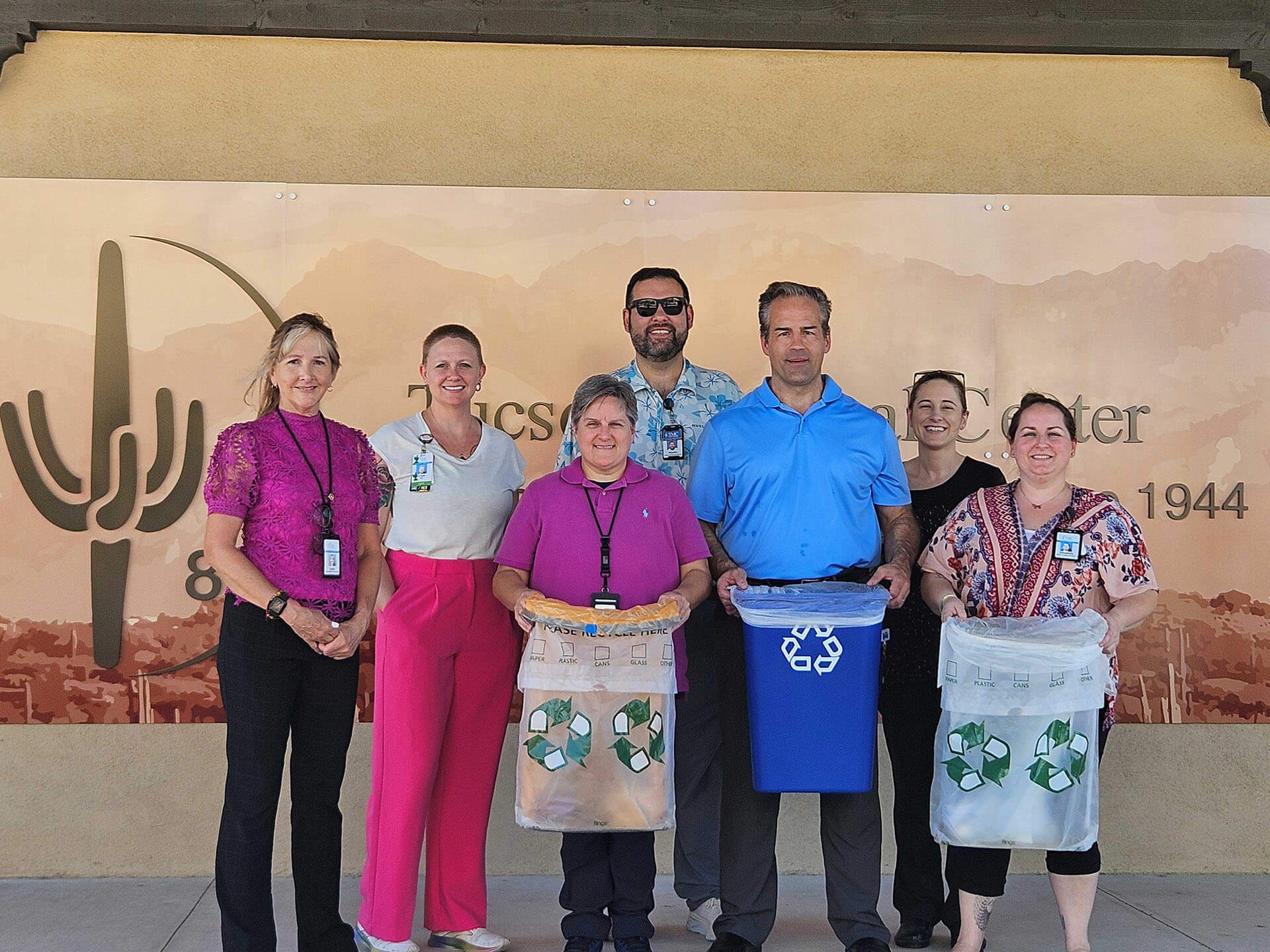
IS steps up to improve TMC recycling
Liz Myers has been recycling at home for years and even started composting her food waste a couple years ago. When she and her colleagues in TMC Information Services brainstormed a way to improve recycling at work, she ended up coordinating a group of about a dozen coworkers trying to improve recycling campus-wide.
“We were asking who wants to be involved or who wants to be in charge, and I ended up doing it because I’ve always recycled and I’ve taught my friends to recycle so I thought, why not?” Myers explains of how she came to coordinate the effort.
Connecting with the city recycling
Myers contacted the city’s recycling program and figured out what was already in place to get the program moving. Most of the 100-plus employees of IS in the Alamo building are taking part in the efforts to recycle things such as cardboard, paper, plastic and aluminum cans.
“We were talking about how IS could be more sustainable and we really just need to be a little bit organized and assign people to do the jobs,” says Greg Carlson.
The volunteers have placed small, blue recycling bins in their offices and meeting spaces. Then, the group takes turns taking the contents of the small bins to the city receptacles each week.
The group created a PowerPoint presentation to try to explain what can and cannot be recycled and tips for efficiency, like flattening cardboard boxes. Besides meeting recycling criteria, everything must be empty and clean. Recycling a cardboard box is good, but not things like a greasy cardboard pizza box. Dirty items or trash is considered a “contamination.”
If your office already has blue recycle bins, it’s recommended you put them near a garbage can. That way, there is less temptation to put garbage in the recycle bin.
“The city will notify us or ticket us if there is a large contamination from our facility,” Myers says.
While some receptacles around campus have a sticker that shows glass is recyclable, Myers says those bins are out-of-date.
“The city started a new recycling program for glass last year, so that has to be recycled separately,” Myers says.
Future plans
Eventually, the IS team hopes to expand the effort to the Atrium and Patio buildings on campus.
“It gets a little more complicated if we are talking about recycling inside the hospital, but we are starting with our office building and we want to expand to the other offices,” Myers says.
Carlson hopes other departments are as eager to step up and get involved.
“We’re discussing how to get other departments involved too,” Carlson says. “We can really make a difference if we keep expanding.”
Tucson has introduced varying programs to recycle products by color. So far, IS is participating in the blue (plastics, cardboards, paper, aluminum, etc.) and orange (hard-to-recycle plastics like bubble wrap and plastic utensils) programs. Purple, the glass program, and green, composting, are on the horizon.
Myers says they don’t expect 100% participation, but they want people to be open-minded.
“We’re not forcing anyone to participate, but we want everyone to respect our efforts,” Myers says.
Resources
IS recommends checking out the links below for more information:
- Blue: https://www.tucsonaz.gov/Departments/Environmental-and-General-Services/Residential-Services/Recycling-Services
- Orange: https://www.tucsonaz.gov/Departments/Environmental-and-General-Services/Residential-Services/Recycling-Services/Hard-to-Recycle-Plastics-Program-Orange-Bin
- Purple:https://www.tucsonaz.gov/Departments/Environmental-and-General-Services/Residential-Services/Recycling-Services/Glass-Recycling
- Green: Compost Cats: https://sustainability.arizona.edu/projects/compost-cats
- Tucson Pilot Program: https://www.tucsonaz.gov/Departments/Environmental-and-General-Services/Los-Reales-Sustainability-Campus/FoodCycle/FoodCycle-At-Home


