


Heart Matters: Innovation at TMC helps heart patients
By Tucson Medical Center
·
06/10/2019
When arteries are blocked to the heart, surgeons typically use the body’s longest vein to bypass the blockages and increase blood flow.
There was a time when surgeons opened the entire length of the leg from the groin to the ankle to harvest the long saphenous vein. This procedure takes up to three hours.
The healing process was slow, with pain and risk of infection for patients who were often pretty sick to begin with.
Over time, technology improved to where the vein could be harvested endoscopically with just little incisions.
New approach to vein harvesting
Tucson Medical Center Surgical First Assists Flavio Ruiz and Armando Corrales have perfected an even simpler, less invasive vein harvesting approach. In about 20 minutes the two Surgical First Assists are able to harvest a vein. They do this by making one small incision at the knee, about the size of a nickel, and using a small device that separates the vein and simultaneously cauterizes attached vein branches.
“While speed never trumps patient safety, efficient vein harvesting is important,” said Julie Ward, director of perioperative services. “The procedure allows surgeons to begin working on the heart and by the time he or she is ready for the bypass, the vein is ready. That allows patients to be under anesthesia for a shorter time, improving safety. Recovery is much faster as well, with patients up and walking the next day with far less pain.”
Spreading the word
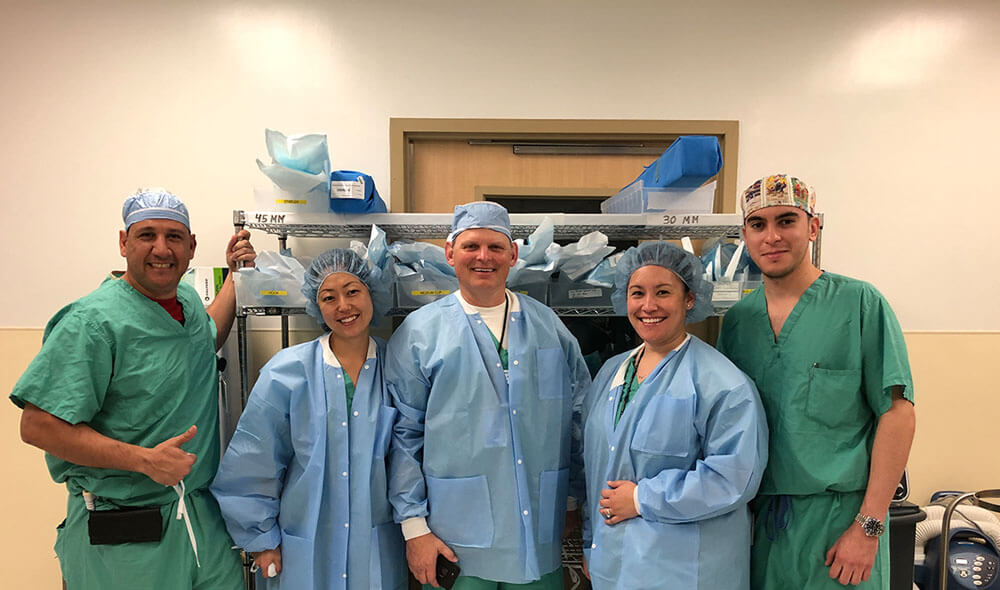
The pair are routinely called upon to share their expertise with other medical professionals who travel from institutions such as Cedars-Sinai and UCLA to watch their techniques.
“Innovation for the sake of innovation is never the goal,” Ruiz said. “Veins are sensitive and can be damaged easily, so it’s important to have the safest technique for patients. We’re proud of the pioneering work we’re doing in this field and our role on our heart teams, but also in our ability to share our work with others to improve processes elsewhere as well.”


